
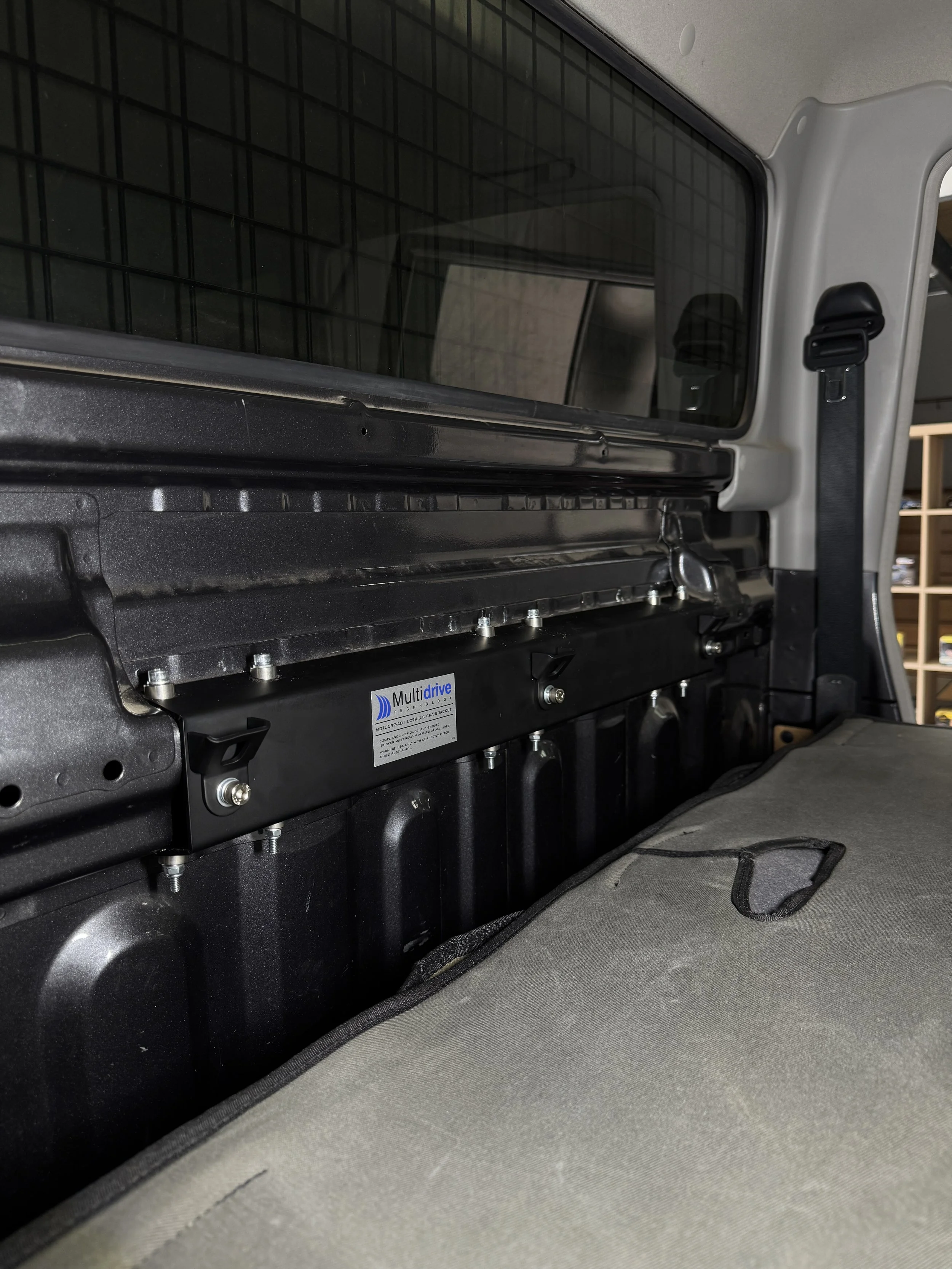
Need an additional Anchor Point? Unsure of what’s right, and what’s not?
Current Victorian Regulations
Authorized VicRoads Signatory

Fast & Efficient with Guaranteed Compliance.

30+ Years of Experience

“We’ll get you on the Road”

Understanding the Regulations
No Guesswork, Just Road-Ready Results.
The key regulation surrounding ISOFIX and anchor points is ADR 34.
Australian Design Rule 34 sets the national safety standard for the design, strength, positioning, and accessibility of child restraint anchorages in motor vehicles.
It specifies how anchor fittings must perform under load and ensures compatibility with Australian child restraint systems. When additional anchor points are installed in a vehicle, the installation must maintain compliance with ADR 34 to ensure occupant safety in the event of a collision.
Any modification that alters or adds anchorages must not compromise the vehicle’s original compliance with this rule.
Supplementary to the Australian Design Rules (ADRs), vehicle modifications are further guided by Vehicle Standards Bulletin 14 (VSBs) and Vehicle Standards Information (VSI’s).
VSB 14 forms the National Code of Practice for Light Vehicle Construction and Modification and provides detailed technical requirements for how modifications, including child restraint anchorage installations under Section LK6, must be designed, installed, and assessed.
In Victoria, VSI’s published by VicRoads adopt and interpret these national standards within the state’s registration framework, outlining when engineering certification and VASS approval are required. Together, VSBs and VSIs ensure that modifications meet both nationally recognized engineering standards and Victorian compliance obligations before a vehicle can remain legally registered.
Who needs Anchor Points?
Installed and Engineered for your kids Safety!

0-6 Months
Children under 6 months must use an approved rearward-facing restraint, secured with a seatbelt or ISOFIX and a top tether, with an inbuilt six-point harness.
Convertible seats can switch to forward-facing when height or weight limits are met. Always follow the manufacturer’s instructions.

6 Months - 4 Years
Children aged 6 months to 4 years must use an approved rearward- or forward-facing restraint. Once they outgrow rearward-facing (usually around 6–12 months), they can move to a forward-facing seat.
Forward-facing restraints are secured with a seatbelt or ISOFIX and a top tether, and include a six-point harness. Some seats also convert into booster seats for older children.

4-7 Years
Children aged 4 to 7 years must use an approved forward-facing restraint or booster seat.
Booster seats are used with a lap-sash seatbelt and provide added side-impact protection and head support. They must never be used with a lap-only belt.
Use a booster until your child outgrows it, when their shoulders no longer fit comfortably or their eye level is above the seat back.
Our Partners
We’re proud to be Babysafe Certified, officially recognized to supply and install their high-quality child restraint kits.
This certification reflects our commitment to child safety and compliance with all relevant Australian Design Rules (ADRs) and Vehicle Standards Bulletins (VSBs). With extensive experience in vehicle engineering and certification, we bring a high level of precision and care to every installation.
Whether it’s for a family car, a rideshare vehicle, or a specialized transport setup, you can trust that our installations meet the highest safety standards, giving you peace of mind on the road.
Find out more about BabySafe below!
We’re proud to be the only Type 2 Fitter officially listed by Kidsafe Victoria for child restraint anchorage installations and compliance services.
Kidsafe Victoria is a government-supported, not-for-profit organization dedicated to preventing childhood injuries and promoting child safety across Australia. Their recognition reflects our commitment to carrying out child restraint anchorage installations to the highest standard, with a strong focus on safety, compliance, and engineering precision.
With extensive experience in vehicle engineering, VASS certification, and ADR compliance, we ensure every installation is completed in accordance with all relevant Australian Design Rules (ADRs) and Vehicle Standards Bulletins (VSBs). From everyday family vehicles to commercial and specialized transport applications, every fitment is engineered with safety, structural integrity, and long-term reliability in mind.
Being recognized by Kidsafe Victoria reinforces our commitment to providing families and operators with compliant, professionally engineered solutions they can trust.